Real estate diversification can extend far beyond owning multiple properties. Property type, geography, tenant exposure, operating model, financing, liquidity, and economic drivers can each influence how an allocation behaves within a broader portfolio.
For investors considering private real estate as part of a broader portfolio, diversification does not necessarily end with the decision to allocate capital outside of traditional public markets.
Real estate is not one uniform asset class. A hotel operates differently from a medical facility. An industrial distribution property responds to different economic drivers than multifamily housing. Senior living introduces its own demographic, operational, and regulatory considerations.
As a result, investors evaluating private real estate may benefit from looking beyond the number of properties owned and considering how different property types, markets, tenants, operators, financing structures, and economic drivers interact.
Prevail Alternative Assets' historical real estate portfolio reflects this broader approach, with properties spanning areas such as hospitality and extended-stay hotels, medical facilities, industrial developments and business parks, multifamily, and assisted living and memory care. See Prevail’s closed transactions on the map.
 HospitalitySpark by Hilton, Kansas City
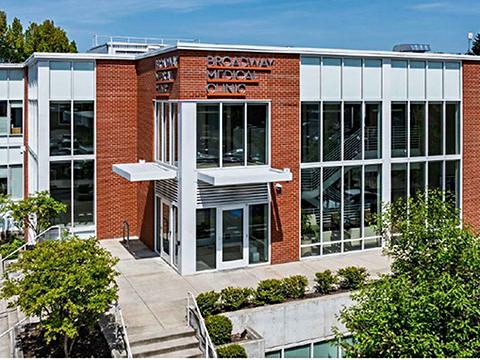 MedicalBroadway Medical Center, Portland
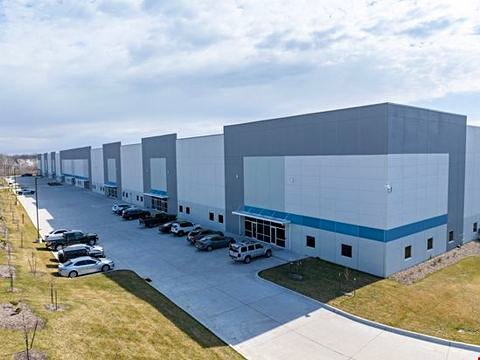 IndustrialCrosswinds II, Ankeny
 MultifamilyVantage at Tomball, Tomball
 Assisted living & memory careWFM3801, Flower Mound
Diversification is not simply about owning more real estate. It is about understanding what makes each exposure economically different.
Different assets. Different economic drivers.
Diversification within private real estate can involve property type, geography, tenant concentration, lease duration, operating intensity, debt structure, liquidity, and sensitivity to broader economic conditions.
The objective is not to own every type of real estate. The objective is to understand what each exposure may contribute to the broader portfolio and what risks may accompany it.
That distinction becomes increasingly important when real estate represents a meaningful component of an investor's overall wealth.
Hospitality & Extended Stay
Hospitality combines ownership of physical real estate with the economics of an operating business.
Hotel rooms may be repriced frequently, which can allow operators to respond to changing demand but can also create greater revenue variability than properties supported by longer-term leases.
Extended-stay hotels may serve business travelers, temporary assignments, relocations, construction crews, healthcare professionals, and other guests requiring lodging for longer periods. Their operating model can differ significantly from full-service and leisure-oriented hotels.
Hospitality investments may be sensitive to management quality, economic conditions, travel demand, labor expenses, competition, financing, property condition, brand requirements, and location.
Medical Real Estate
Medical real estate can include medical office buildings, outpatient facilities, specialty practices, surgical facilities, diagnostic centers, and other healthcare-oriented properties.
Unlike conventional office space, healthcare facilities can require significant investment in specialized infrastructure, equipment, layouts, regulatory requirements, and patient accessibility.
Those characteristics can create a different relationship between the tenant and the property. At the same time, healthcare real estate remains subject to tenant credit risk, lease renewal risk, changes in reimbursement environments, operating conditions, competition, and property-specific considerations.
Healthcare-related properties can introduce specialized tenant, regulatory, operational, re-leasing, capital expenditure, financing, and market risks. The specific property, tenant, lease, and healthcare market should be evaluated independently.
Industrial & Business Parks
Industrial real estate can include distribution centers, warehouses, manufacturing facilities, flex properties, logistics facilities, and business parks serving a variety of corporate operations.
Location considerations can be particularly important. Interstate access, rail connectivity, airport proximity, labor availability, utilities, power capacity, supply-chain positioning, and surrounding infrastructure may directly influence tenant demand.
Corporate tenants may also invest significant capital adapting industrial space to their specific operations. Depending on the property and lease, this can affect tenant retention, but it may also increase concentration risk if the building is highly specialized.
Industrial properties can involve tenant concentration, credit, lease rollover, capital expenditure, environmental, financing, market, and re-leasing risks. Lease structure and property adaptability can be especially important.
Multifamily
Multifamily real estate provides exposure to residential rental demand and can range from stabilized apartment communities to newly constructed or developing properties.
Market fundamentals such as household formation, population trends, employment growth, housing affordability, competing supply, rent levels, and local economic conditions can all influence performance.
Development-stage multifamily may carry additional construction, financing, lease-up, and timing risks that differ from those associated with stabilized properties.
Multifamily investments may involve market, financing, leverage, operating, regulatory, tenant, construction, lease-up, and valuation risks. Local supply and demand conditions can significantly affect property performance.
Assisted Living & Memory Care
Assisted living and memory care properties sit at the intersection of real estate, healthcare, demographics, and operating services.
Demand can be influenced by an aging population, household wealth, local demographics, healthcare needs, family decision-making, available competing facilities, and the quality of the operating organization.
Unlike conventional residential real estate, these properties can require specialized staffing, licensing, resident services, regulatory oversight, healthcare coordination, and operating expertise.
Senior living investments may involve operational, regulatory, staffing, healthcare, occupancy, market, financing, liability, and property-specific risks. Operator quality can play a significant role in outcomes.
Diversification is multidimensional.
Owning several properties does not necessarily create a broadly diversified real estate portfolio.
Several multifamily properties concentrated in the same metropolitan area, for example, may still share similar employment trends, renter demographics, insurance costs, financing conditions, regulatory exposure, and local supply pressures.
A broader private real estate allocation may consider property type, geography, tenant exposure, lease structure, operating intensity, demand drivers, leverage, liquidity, development stage, and investment horizon.
Hospitality assets, medical real estate, industrial properties, multifamily communities, and senior living facilities each introduce different operating and economic characteristics.
The purpose of diversification is not to accumulate as many property types as possible. It is to understand the role each exposure may play within an investor's broader financial strategy.
Private real estate diversification: FAQ
What does diversification within private real estate mean?
Diversification within private real estate can involve spreading exposure across different property types, geographic markets, tenants, industries, lease structures, operating models, financing arrangements, investment stages, and time horizons. Simply owning multiple properties does not necessarily mean a portfolio is broadly diversified.
Why consider different types of real estate?
Different property types may respond to different economic and demographic forces. Hospitality may be influenced by travel patterns and operating performance, medical properties by healthcare demand and tenant quality, industrial real estate by logistics and corporate activity, multifamily by housing demand, and senior living by demographics and operating expertise.
Is private real estate uncorrelated with the stock market?
Not necessarily. Some forms of private real estate may behave differently from publicly traded investments, but correlations are not fixed and can change with market conditions, interest rates, financing, property type, geography, leverage, and investment structure.
Which private real estate property type is best?
There is no single property type that is appropriate for every investor. The merits and risks of hospitality, medical, industrial, multifamily, senior living, or other property types depend on the specific asset, market, operator, financing, investment structure, investor objectives, liquidity needs, and broader portfolio.
What should investors evaluate when considering private real estate?
Evaluation may include property fundamentals, market conditions, tenant quality, lease terms, operator experience, financing and leverage, liquidity, property condition, operating costs, capital requirements, legal structure, tax considerations, conflicts of interest, assumptions, and potential downside scenarios.
Does diversification eliminate real estate investment risk?
No. Diversification may help manage certain concentrations, but it cannot assure a profit or eliminate the possibility of loss. Private real estate may involve illiquidity, leverage, market changes, tenant or operator issues, financing risk, economic changes, regulatory developments, property-specific risks, and possible loss of principal.
For general information only; not an offer to sell or a solicitation to buy any security. Private real estate is illiquid and involves risk, including loss of principal. Past performance does not guarantee future results. Read the full disclosures